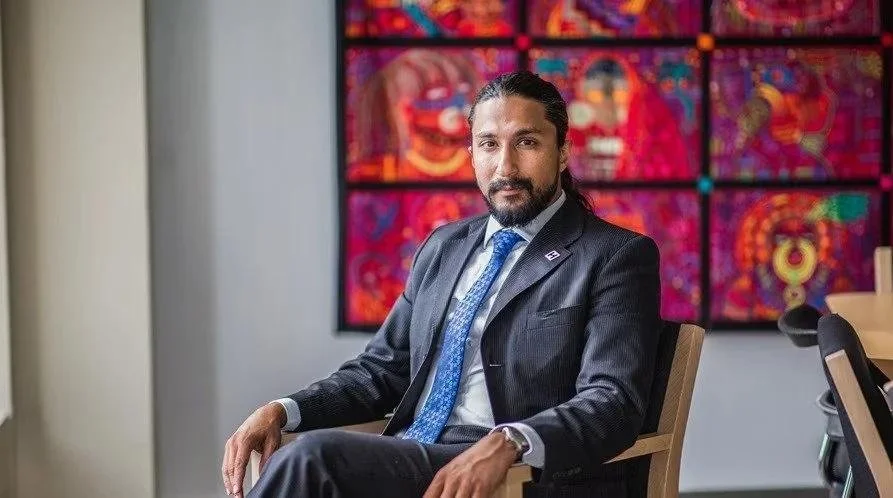
From Brain Drain to Brain Gain: How Africa’s Diaspora Is Fueling a New Era of Innovation
The Radiant Immigrant Story of Zachariah George, from Kerala and Muscat to Stanford, Wall Street, South Africa and the front lines of African venture capital
For decades, one of Africa’s most familiar migration stories was told through the language of loss. A doctor left for Britain. An engineer accepted an opportunity in Canada. A researcher joined an American university. A promising graduate built a career in Europe. Each departure carried the same concern: Africa was educating ambitious people, while other economies were benefiting from their talent. Economists gave the phenomenon a name, brain drain.
Yet migration rarely ends when someone crosses a border.
People take knowledge with them, but they also build new knowledge. They develop professional networks, understand new industries, gain access to capital and learn how different systems operate. Some return home. Others invest from abroad, mentor entrepreneurs, introduce founders to international partners or build organizations connecting several markets at once.
That changing movement of knowledge is beginning to reshape the old brain drain debate.
Zachariah George’s life offers an unusual window into it.
Born in Kerala, India, raised in Muscat, Oman, educated at IIT Madras and Stanford University, trained in global finance in New York and now based in South Africa, George has spent much of his life crossing geographic, cultural and professional boundaries. Today, he is Co-Founder and Managing Partner of Launch Africa Ventures, an early-stage venture capital firm focused on seed and pre-Series A businesses across Africa.
His story reaches beyond venture capital.
It raises a larger question about immigration, identity and economic development: What happens when international experience finds a new home and begins creating opportunity for people who were never part of the original journey?
For George, the answer is unfolding across Africa.
A CHILDHOOD SHAPED BETWEEN COUNTRIES
George’s story begins in Kerala, on India’s southwestern coast, but his childhood developed more than 2,000 kilometers away in Muscat.
His family lived in Oman, where his father worked in finance and his mother taught. George has described the experience of growing up in an international environment as part of a third-culture upbringing. He spent roughly his first 16 years in the Middle East before moving to India for university.
For many immigrants and children raised outside their country of birth, identity is rarely answered with one place name. Culture comes from home, school, friends, language, family traditions and the society outside the front door. Belonging develops across several environments.
That background later became relevant to George’s work as an investor.
Venture capital demands more than the ability to read financial statements. Investors constantly interpret people, markets and behavior. A business model successful in Cape Town does not automatically fit Lagos. A strategy developed in New York might fail in Accra. The way customers buy, trust brands, use technology and respond to pricing shifts between countries.
George learned early that context matters.
After Oman, India became the next major chapter. He studied mechanical engineering at the Indian Institute of Technology Madras, one of India’s prominent technical institutions. The education strengthened his analytical foundation, but it also represented another cultural transition. He was born in India, yet he had spent much of his childhood abroad.
His career was already being shaped by movement.
India would lead to the United States. Engineering would lead to finance. Finance would eventually lead him to entrepreneurship and venture capital.
None of it followed a neat script.
George later studied at Stanford University, completing a master’s program in Management Science and Engineering with a focus connected to finance and management.
Stanford placed him near one of the world’s most influential technology ecosystems, but George did not immediately move into venture capital or startup life. He went to New York.
His career included years at Lehman Brothers and Barclays Capital, with experience spanning mergers and acquisitions, finance strategy and risk management. Stanford Graduate School of Business describes him as having spent more than a decade on Wall Street before Africa changed the direction of his career.
Wall Street and African early-stage entrepreneurship appear to occupy opposite ends of finance.
One deals with major institutions, sophisticated financial structures and established capital markets. The other often starts with a small team, early customers and a founder trying to prove that an idea works.
Yet George’s financial training would become valuable precisely because Africa’s startup ecosystem needed people who understood both worlds.
Entrepreneurs need ambition, but investment requires discipline. Revenue matters. Customer behavior matters. Unit economics matter. Governance matters. Cash flow matters. A compelling story might earn attention, but a sustainable business has to survive once the meeting ends.
George later became known for encouraging founders to understand their companies without hiding behind complicated presentations. In a Stanford discussion on seed funding, he stressed the importance of understanding the customer and the economics behind the business. His broader message is simple: founders should know why people buy, why they stay and what it costs to serve them.
That principle would become important in the work he later pursued across Africa.
In 2010, George traveled to South Africa for the FIFA World Cup.
He arrived for football.
He found a reason to stay.
After years in established financial centers, South Africa presented something different. George saw a technology ecosystem that was still young compared with markets he had encountered elsewhere. Startup infrastructure was developing, early-stage investment remained limited and large gaps existed between promising entrepreneurs and the capital required to grow their companies.
Launch Africa’s account of his journey says he recognized how little technology investment infrastructure existed on the continent at the time. Rather than interpreting the gap as a warning, he saw an opportunity to help build what was missing.
The distinction matters.
Many immigrant stories focus on what a person hopes to receive from a destination. Better education. A stronger career. Financial security. Safety. Professional advancement.
George’s South African chapter eventually became a story about contribution.
He brought experience from engineering, Stanford and Wall Street into a developing entrepreneurial ecosystem. He began angel investing, worked closely with founders and became involved in building accelerators.
Among those efforts was Tech Lab Africa in partnership with Barclays, which was later sold to Techstars. George also helped bring Startupbootcamp AfriTech to the continent, working with early-stage companies before many of them became widely known.
Those years put him close to a recurring problem.
African founders did not lack ideas.
They lacked enough of the right capital at the right moment.
The earliest stages of a startup are often unforgiving. A founder has gone beyond a concept. A product exists. Customers are beginning to appear. Revenue starts arriving. The business has evidence of demand, yet it remains too young for many large institutional investors. At this stage, time becomes almost as important as money. A business needs enough runway to hire the right people, strengthen its product, learn from customers, enter new markets and reach the level of performance required for a larger investment round.
George repeatedly watched African founders reach this point.
Some emerged from accelerators with promising businesses but lacked financing for the next 12 to 18 months. Others struggled to attract global investors because they operated in markets unfamiliar to outsiders.
This funding gap became part of the foundation for Launch Africa Ventures.
George and Janade Du Plessis established Launch Africa in 2020 around seed and pre-Series A investment. The firm’s first fund raised about $36.2 million and backed 133 startups across 22 African countries. Launch Africa reports that it deployed roughly $31 million through Fund I.
The geographic spread is as important as the number of investments.
African venture capital has often concentrated around Nigeria, South Africa, Kenya and Egypt. Launch Africa deliberately looked further. Its portfolio extended into markets including the Democratic Republic of Congo, Cameroon, Madagascar, Benin and Sudan. In several instances, Launch Africa says it became the first institutional investor backing businesses in those markets.
That approach reflects a deeper belief about African innovation.
Talent does not exist only where investors already know where to look.
A brilliant founder might be building in Kigali, Dakar, Gaborone, Kampala or Kinshasa. The challenge for investors is not only finding opportunity. It is developing enough understanding of local markets to recognize opportunity before everyone else does.
Africa is not one market.
Its countries have different currencies, regulations, languages, consumer habits and levels of infrastructure. An investor working across the continent has to respect those differences rather than treating Africa as one large economic unit.
George’s multicultural life had prepared him for that complexity long before he knew Africa would become home.
FROM BRAIN DRAIN TO BRAIN CIRCULATION
This is where George’s immigrant story meets Africa’s larger economic story.
Brain drain assumes a largely one-directional movement of talent. Someone leaves one country and contributes to another.
Modern migration is far more connected.
A Kenyan engineer living in California might advise a startup in Nairobi. A Ghanaian executive in London might invest in Accra. A Nigerian banker in New York might mentor fintech founders in Lagos. A South African researcher working overseas might maintain partnerships with universities at home.
Physical return is only one form of contribution.
Knowledge also travels through investment, mentorship, research, board service, partnerships and professional introductions.
George’s own journey takes the idea a step further. He was not born in Africa. His expertise did not “return” to the continent in the traditional sense. He chose Africa.
Experience gathered in Oman, India and the United States found a home in South Africa and later became part of an investment platform supporting entrepreneurs across the continent.
That is brain gain in a wider form.
It is less about reversing migration and more about circulating knowledge.
In a Stanford interview, George described reaching an important realization about Africa’s economic future: “we can’t just keep draining Africa of its resources.”
The statement carries weight beyond natural resources.
Human capital is also a resource.
The future depends partly on whether global experience stays connected to Africa, even after people move.
AFRICA’S DIASPORA HOLDS MORE THAN REMITTANCES
Discussions about Africa’s diaspora often begin with money sent home.
Remittances matter enormously. They help families pay for education, housing, healthcare and daily needs. Yet measuring diaspora contribution only through transfers overlooks another valuable asset: accumulated expertise.
Africans abroad occupy senior roles in technology, healthcare, banking, research, academia, law, engineering and entrepreneurship. Their careers create access to relationships, knowledge and institutions that younger African companies often need.
A founder entering healthcare might benefit from an experienced doctor abroad who understands international compliance. A fintech startup planning expansion might learn from an executive who has worked inside global banking systems. An entrepreneur seeking American customers might benefit from someone who already understands the market.
The opportunity is not limited to writing a cheque.
A useful introduction might create more value than a small investment. A mentor might help a founder avoid a costly strategic mistake. An experienced operator might help a startup prepare for expansion before the company spends money entering the wrong market.
This idea appears repeatedly in George’s approach to venture capital.
Stanford’s profile of his investment philosophy notes that he recognized African entrepreneurs needed mentorship, connections and intellectual capital alongside financing.
It explains why Launch Africa’s investor network matters beyond fundraising.
The people behind capital also hold professional knowledge.
For immigrants around the world, the lesson is motivating. Success abroad does not need to become separation from home. Experience gained in one country might create value in another.
You do not have to choose between building your future and staying connected to where you came from.
George’s advice to entrepreneurs is striking because it is rarely about hype. He places unusual emphasis on preparation, humility and understanding the customer. One of his most memorable pieces of advice is: “Founders should get VCs as coaches, not captains.”
The message goes beyond fundraising.
Leadership requires conviction without becoming resistant to advice.
A founder should know where the company is going. Investors should not operate the business for them. Yet strong leaders listen, process feedback and remain willing to change their assumptions when evidence demands it.
For young immigrants and entrepreneurs, this mindset is useful far beyond venture capital.
Confidence and coachability belong together.
George also encourages founders to study investors before asking them for money. He has described being impressed by entrepreneurs who research a fund’s existing portfolio and explain exactly how their business adds value to that network.
Preparation signals respect.
It also changes the relationship between founder and investor from a request for money into a conversation about partnership.
Another recurring George principle is clarity.
A founder should understand the business well enough to explain the market, customer and economics without depending on a complicated model. Investors want to know where the revenue comes from, why customers remain and whether the company understands the problem it claims to solve.
The motivation hidden inside this advice is important.
You do not need to impress people with complexity.
Know your work deeply enough to make it understandable.
Venture capital often looks glamorous from the outside.
Announcements celebrate funds raised, investments closed and companies backed. The years of relationship building, due diligence, failed conversations and difficult decisions receive less attention.
George has been open about this reality.
When people asked how Launch Africa built one of the continent’s most active early-stage investment portfolios in a short period, his response was direct: “if you are looking for shortcuts, don’t work in the VC industry.”
That sentence might be one of the strongest motivational lessons in his story.
There is no shortcut to credibility.
George did not arrive in South Africa in 2010 and immediately establish a major venture fund. He spent years angel investing, building accelerators, understanding founders, developing networks and learning the realities of African markets.
Launch Africa was built after that groundwork.
Immigrant success stories often become compressed after the outcome is known. Years of uncertainty are reduced to a few lines between arrival and achievement.
George’s journey deserves a different reading.
He built expertise before he built a fund.
He entered an ecosystem before trying to lead within it.
He learned from founders before investing in more than a hundred of them.
The lesson is useful for anyone starting over in a new country or industry.
Progress rarely announces itself while it is happening.
Sometimes the years that look like preparation are the years building the foundation for everything that follows.
Another important part of George’s investment thinking is his focus on local realities.
Africa’s technology sector often receives comparison with Silicon Valley, but African founders operate under different conditions.
Customer acquisition behaves differently. Infrastructure differs. Payment systems vary. Logistics are uneven. Regulation changes across borders. Consumer income levels differ dramatically.
Companies therefore need to solve problems grounded in the realities of their customers.
George has spoken about the high cost of acquiring customers in many African markets and the importance of customer retention and lifetime value. His advice returns to a straightforward principle: technology alone does not compensate for weak understanding of the customer.
That message feels particularly relevant during an era obsessed with artificial intelligence and rapid technological change.
Technology is a tool.
The customer problem remains the business.
Across Africa, some of the strongest startup opportunities have emerged around financial access, logistics, healthcare, commerce, energy, insurance and business infrastructure. These sectors matter because they address daily economic needs.
African entrepreneurship becomes stronger when founders build for reality rather than imitation.
THE RADIANT IMMIGRANT
The Immigrant Nation Podcast exists to tell stories about movement, identity, ambition and contribution. Zachariah George’s life brings those themes together in a way that resists a simple label.
He is Indian-born and Oman-raised. He studied engineering at IIT Madras and finance and management at Stanford. Wall Street gave him institutional financial experience. South Africa gave him a home and a mission. Africa gave his professional journey a larger purpose.
This is what makes him a Radiant Immigrant.
Not the degrees.
Not Wall Street.
Not the investment portfolio by itself.
The significance lies in what happened to the knowledge gathered along the journey.
It moved.
It reached founders.
It became mentorship.
It became investment.
It helped build structures giving entrepreneurs a stronger chance of moving from an early product toward a sustainable company.
The Radiant Immigrant story is therefore not about how far someone travels.
It is about what they leave stronger because they were there.
George’s journey challenges the assumption that belonging depends entirely on birthplace.
He chose South Africa as home. He chose African entrepreneurship as the focus of his work.
Contribution became a form of belonging.
AFRICA’S NEXT GREAT ASSET IS CONNECTION
Africa still faces real consequences when skilled professionals leave essential sectors. Brain drain has not disappeared, and the solution is not to romanticize migration.
The more interesting opportunity is to build systems that keep talent connected.
Universities should maintain stronger relationships with graduates abroad. Startup communities should build networks connecting founders with diaspora professionals. Investors should create credible pathways for global Africans interested in supporting businesses on the continent. Companies should seek mentors who understand both international standards and African realities.
The objective is not to demand that every African abroad return.
The objective is to make distance less final.
George’s story proves another side of the same principle. Africa also gains when immigrants from elsewhere arrive, commit themselves to the continent and apply their global experience to African opportunity.
The flow of talent should not be understood as a contest where one country wins only when another loses.
Knowledge grows when it circulates.
Somewhere today, a student is leaving Nairobi, Lagos, Accra, Kigali or Johannesburg for a university thousands of miles away.
A professional is accepting a role in London.
An engineer is moving to Canada.
A researcher is joining an American institution.
The old brain drain narrative sees the departure.
A more ambitious story asks what happens after it.
What will they learn?
Who will they meet?
What knowledge will they gather?
What businesses will they eventually fund, mentor, join or inspire?
And how will Africa remain part of the journey?
Zachariah George’s life offers one answer.
A boy born in Kerala grew up in Muscat. He studied at IIT Madras. Stanford took him to another level of education. Wall Street exposed him to global finance. A trip to South Africa changed his direction. Years later, he became part of a venture capital firm that invested in 133 startups across 22 African countries through its first fund.
No single border explains the story.
No single country owns all the experience behind it.
That is exactly the point.
The future of African innovation will be influenced by people who stayed, people who left and returned, people who remained abroad but stayed connected, and immigrants from elsewhere who chose Africa as the place to build.
For George, success has involved more than moving from one prestigious institution to another. His career eventually became centered on helping founders move forward.
His message to the next generation is found throughout the choices he has made and the advice he gives: learn your market, understand your customer, stay open to coaching, do the difficult preparation and stop looking for shortcuts.
For Africans abroad, another message stands out.
Your knowledge still has a destination.
Your network still has value.
Your experience might open a door for somebody building thousands of miles away.
Brain drain begins with departure.
Brain gain begins when connection survives it.
And Zachariah George’s journey shows what happens when experience collected across the world meets a place worth investing it in.
That is the story of a Radiant Immigrant.
Watch more on YouTube and subscribe to the channel: https://youtu.be/KPXC77n1pD0?si=SybEl7WLer46r1NG