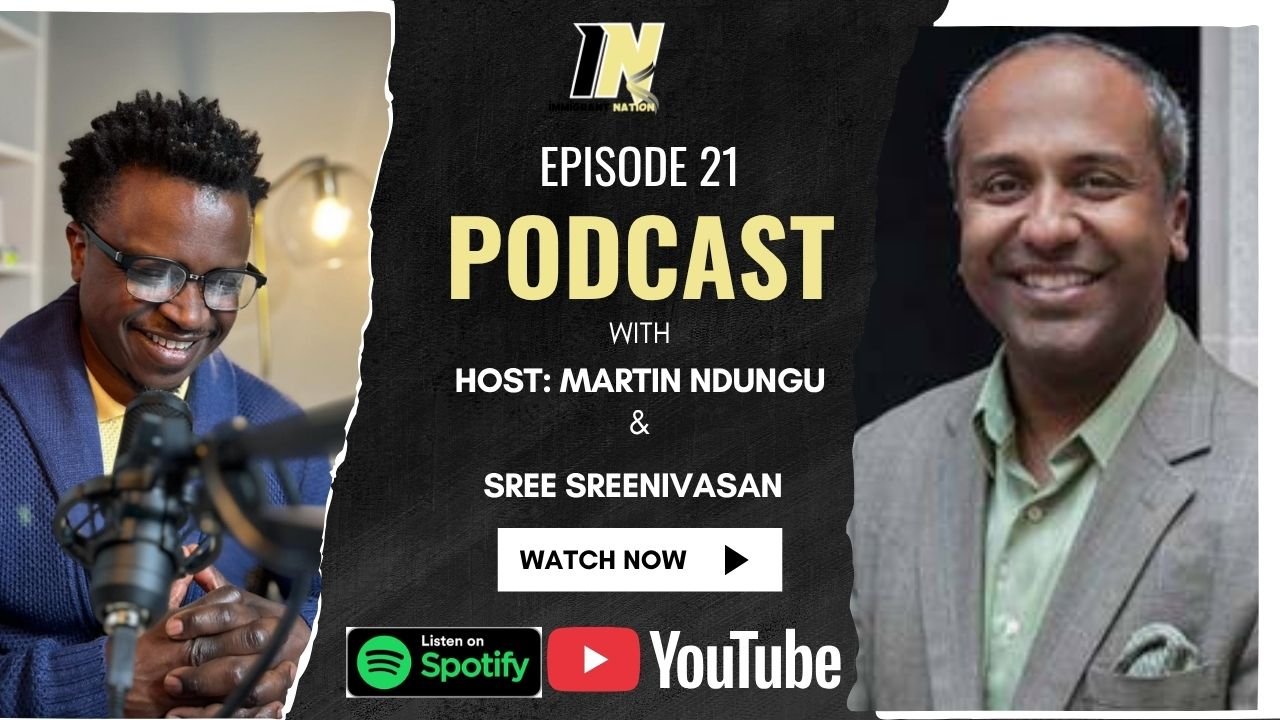
The Digital Immigrant Who Refused to Stay Small
Sree Sreenivasan liked to call himself a “digital immigrant,” a phrase that carried more weight than it seemed. It wasn’t just about technology—it was about movement, adaptation, and the quiet courage it takes to start over in unfamiliar places. His life had been a series of transitions across countries, cultures, and careers, each one demanding that he learn new rules, new languages, and new ways of being seen.
In the early days, nothing about his journey looked extraordinary. He was simply someone trying to find his footing in a world that didn’t always make space for outsiders. But instead of shrinking himself to fit in, he paid attention. He watched how people connected, how ideas spread, and how stories traveled. And when the digital world began to expand, he saw something others missed—not noise, but possibility.
Social media, to many, was just a distraction. To him, it was a doorway. He stepped through it with curiosity, not strategy. He shared thoughts, responded to people, and slowly built relationships. Not the kind that sit silently on a contact list, but the kind that breathe—conversations, exchanges, moments of real connection. Over time, something powerful began to form. His network wasn’t just growing; it was becoming a community.
That community would one day change his life.
When he lost his job, it could have been the end of a chapter marked by doubt and retreat. Many people would have disappeared quietly, trying to fix things behind the scenes. But he chose a different path. He went online and told the truth. No filters, no polished narrative—just honesty. And in that moment of vulnerability, something remarkable happened. People responded. They reached out, shared opportunities, offered support. What could have been a silent fall turned into a loud resurgence.
It was then that he fully understood something he had been building all along: your network is not just a ladder for climbing higher; it is a net that catches you when you fall.
As his journey continued, his path twisted in ways that didn’t fit traditional expectations. Journalism led to teaching. Teaching led to digital strategy. Strategy led to leadership roles in institutions that carried centuries of history. At the Metropolitan Museum of Art, he found himself helping one of the world’s most prestigious cultural spaces step into the digital age. It was a strange and beautiful intersection—ancient art meeting modern storytelling—and he stood right at the center of it.
But even as his career grew, he never lost sight of a simple truth: success wasn’t about titles or positions. It was about communication. The ability to take an idea, shape it clearly, and share it in a way that others could understand and feel. He believed that anyone could learn this skill, and that it mattered more than almost anything else. Not perfection, not complexity—just clarity and honesty.
The world around him kept changing, faster than ever. Technology evolved, platforms rose and fell, and conversations shifted at lightning speed. When artificial intelligence began to reshape industries, many people reacted with fear. He didn’t ignore the risks, but he also didn’t let them define his thinking. Instead, he focused on what wouldn’t change. The need for human connection. The value of clear thinking. The power of storytelling. Machines could process information, but they couldn’t replace the human ability to connect meaningfully with another person.
Looking back, the thing that once made him feel like an outsider—his constant movement between cultures and identities—became his greatest strength. It gave him perspective. It taught him resilience. It forced him to adapt, again and again, until adaptability itself became second nature.
His story was never about following a straight path. It was about embracing detours, trusting curiosity, and finding opportunity in uncertainty. It was about showing up, even when things felt unclear, and choosing to engage instead of withdraw.
And somewhere along the way, the digital immigrant stopped feeling like a stranger. He became a bridge—between people, ideas, and worlds that might never have connected otherwise.
In the end, his journey offered a quiet but powerful reminder: you don’t need a perfect plan to build a meaningful life. You just need the courage to start, the willingness to connect, and the belief that every experience—no matter how uncertain—can become part of something bigger.
More content on https://www.youtube.com/watch?v=8A1BT9LjBRo