What if the biggest decision of your life wasn’t just about crossing a border… but about redefining your future, your identity, and your family’s next generation?
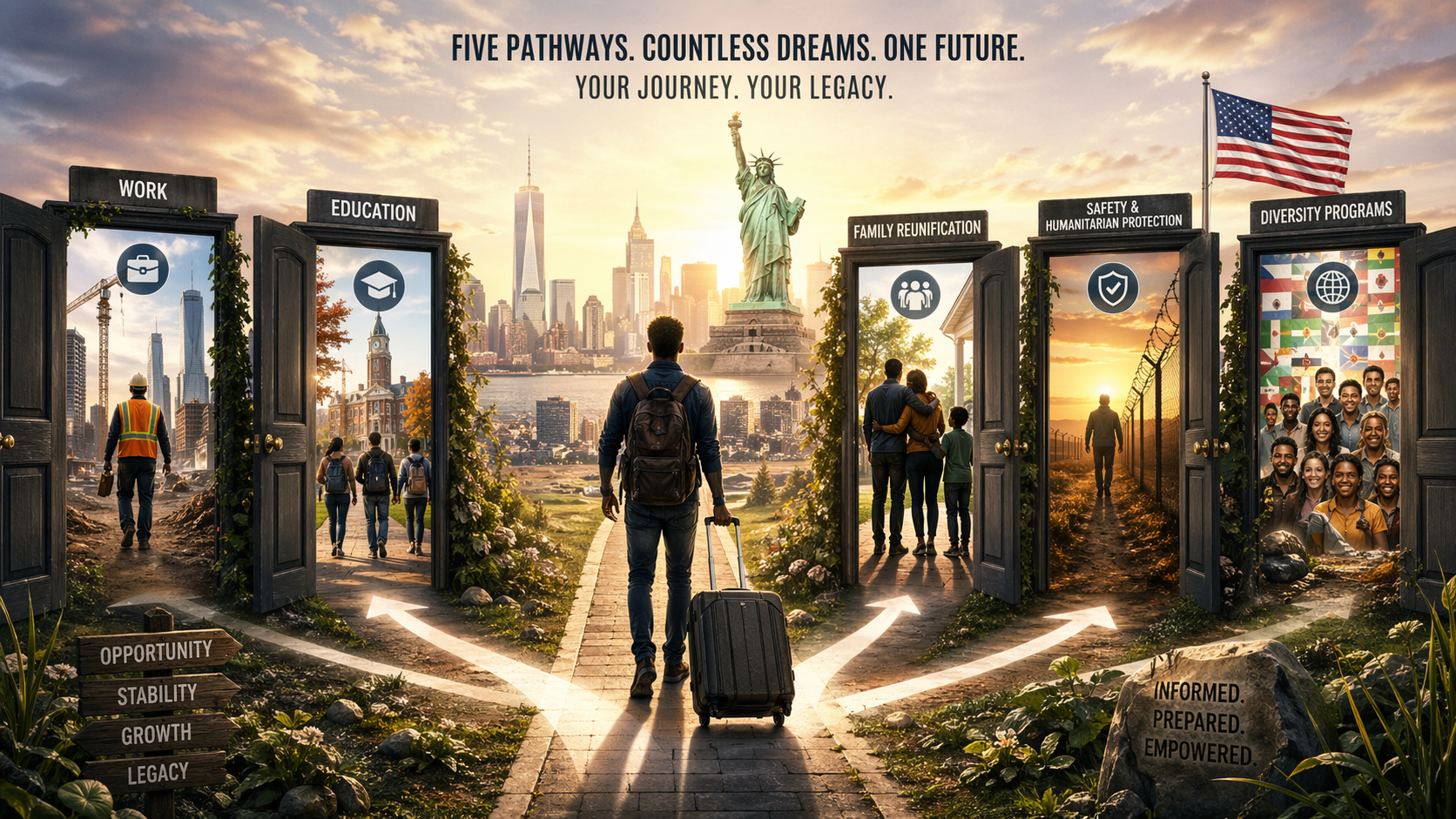
Every year, millions of people make the journey to the United States not by chance, but through one of five recognized legal pathways that shape modern immigration: work, education, family reunification, safety, and diversity programs. Behind each category is a deeply human story—of ambition, survival, sacrifice, and hope.
Work remains one of the strongest drivers. Skilled professionals, caregivers, engineers, construction workers, and tech specialists move to fill labor gaps and build industries that power the economy. Many arrive from countries like India, Kenya, Uganda, and Tanzania, bringing expertise, resilience, and a desire to build stable lives. For many, employment is not just income—it is dignity, progress, and the chance to uplift families back home.
Education is another powerful gateway. Students enter through universities, colleges, and training programs, often on temporary visas that open doors to global opportunity. From classrooms in Nairobi to lecture halls in Delhi, young people carry dreams of innovation, leadership, and transformation. Some return home with knowledge, while others transition into long-term careers abroad, reshaping industries across borders.
Family reunification remains one of the most emotionally driven pathways. It allows citizens and residents to bring spouses, children, and relatives to join them. Behind this category are powerful reunions—parents finally embracing children after years apart, siblings rebuilding bonds across continents, and families restoring what migration once separated. It is a reminder that immigration is not only economic or political, but deeply personal.
Safety-based immigration speaks to those fleeing conflict, persecution, or instability. Individuals from various regions seek protection and a chance to rebuild life in a secure environment. This pathway is grounded in humanitarian values, offering refuge to those who cannot safely return home. For many, it is not a choice of opportunity, but a necessity for survival and dignity.
The diversity visa program adds another dimension, designed to broaden representation by offering opportunities to individuals from countries with historically low immigration rates to the United States. It reflects an attempt to maintain a balanced and globally diverse immigrant population, strengthening cultural exchange and inclusivity.
Across all five pathways, one truth remains constant: immigration is rarely just about relocation. It is about starting over under pressure, carrying responsibility across borders, and navigating systems that demand patience and resilience.
From Kenya’s ambitious professionals, Uganda’s young scholars, Tanzania’s hardworking families, to India’s global tech talent, the United States continues to be a destination shaped by global movement. Each journey is different, yet connected by a shared desire for stability, opportunity, and growth.
But here is the deeper question that often goes unasked: when people arrive with hope in their hearts, are the systems they enter designed to help them thrive—or simply to process them?
Immigration in North America is not just a policy conversation. It is a human story unfolding in real time, shaped by laws, but lived by people.
And if you are part of that journey—whether planning, waiting, studying, working, or reuniting—your story is already part of a much bigger global chapter still being written.
The question is not only why people come… but what they are able to become once they arrive.
Stay informed, stay prepared, and stay intentional. Whether you are navigating work, study, or family immigration pathways, understanding the system is the first step toward making your journey successful, legal, and meaningful.